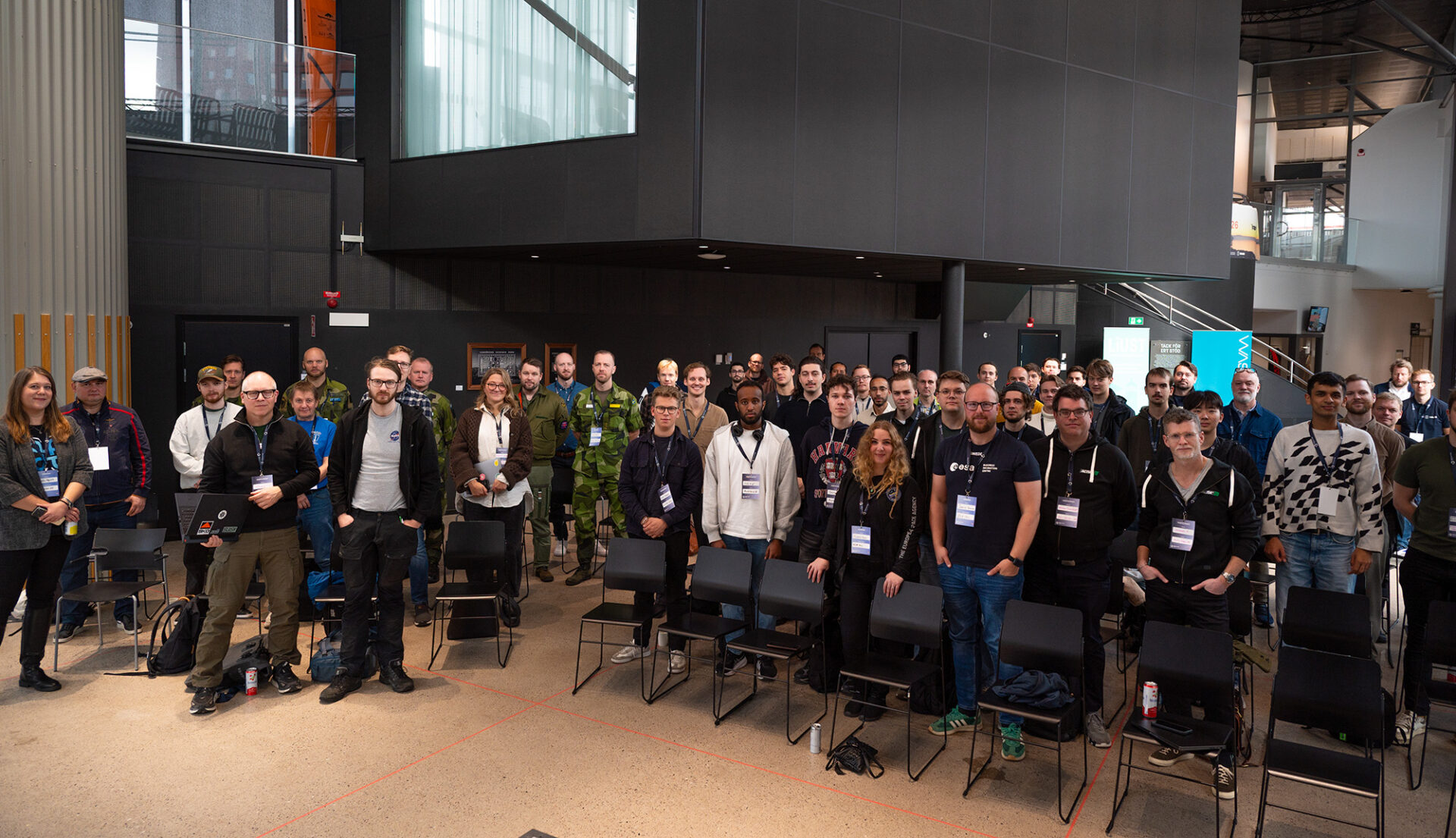
As one of eight European host locations for the EUDIS Defence Hackathon, Linköping brought together 55 participants across 16 teams to tackle real-world defence challenges. Supported by 36 mentors from academia, industry and the defence sector, Sweden’s first edition demonstrated how operational needs and technical expertise can come together to develop new solutions as part of a wider European innovation initiative.
From 15 to 17 October 2026, Linköping University hosted Sweden’s first EUDIS Defence Hackathon. Over two and a half days, students, researchers, startups and industry professionals developed concepts and prototypes addressing current challenges in the defence sector.
The hackathon was organised by Defense Hub Sweden together with Linköping Science Park, LEAD, Linköping University and Norrköping Science Park. It formed part of the EU-funded European Defence Innovation Scheme (EUDIS), with hackathons taking place simultaneously at seven other locations across Europe.
Connecting operational needs with technical expertise
A central part of the event was access to 36 mentors, representing organisations including the Swedish Armed Forces, Saab Aeronautics, Combitech, Linköping University, WARA PS, MCF and ESA BIC.
By bringing together operational, technical and business development expertise, participants were able to test their ideas, explore their practical relevance and refine their solutions throughout the event.
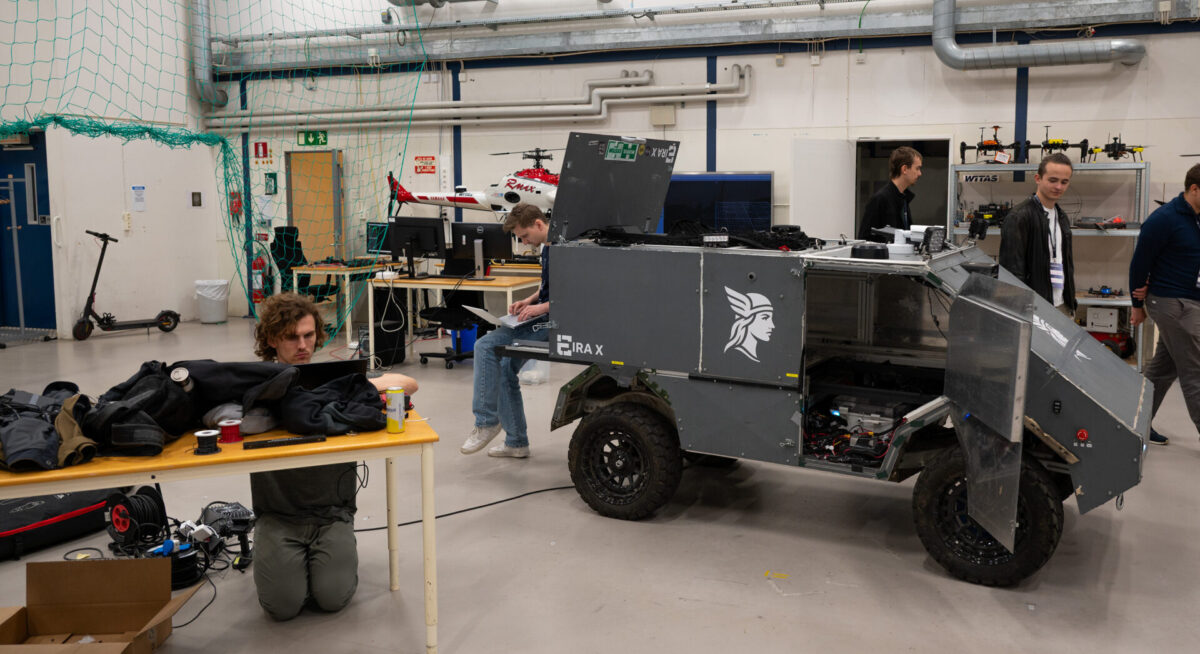
Teams also had access to Linköping University’s AI Lab at Terra for development and testing. Among those making use of the facilities was EIRA Systems, which worked on an autonomous ground vehicle.
Under the theme Autonomy on the Battlefield, participants addressed three challenges:
- Navigation without GNSS: Enabling autonomous navigation without GPS or other satellite-based positioning systems.
- Coordination of Autonomous Swarms: Developing coordination between drones and robotic systems with limited human intervention.
- Land, Air, and Maritime Fleet Management Visualisation: Using operational data to improve fleet monitoring, resource planning and decision-making.
Some teams combined elements from multiple challenges, exploring solutions that addressed several operational needs.
Three winning solutions
Following two and a half days of development, all 16 teams presented their solutions to a jury comprising Lena Miranda (Linköping Science Park), Catharina Sandberg (LEAD), Mattias Tiger (Linköping University), Isabelle Nyroth (Yvarbrims) and Olof Sundin (Saab Aeronautics).
Three teams received awards from a total prize pool of €10,000, sponsored by Saab.
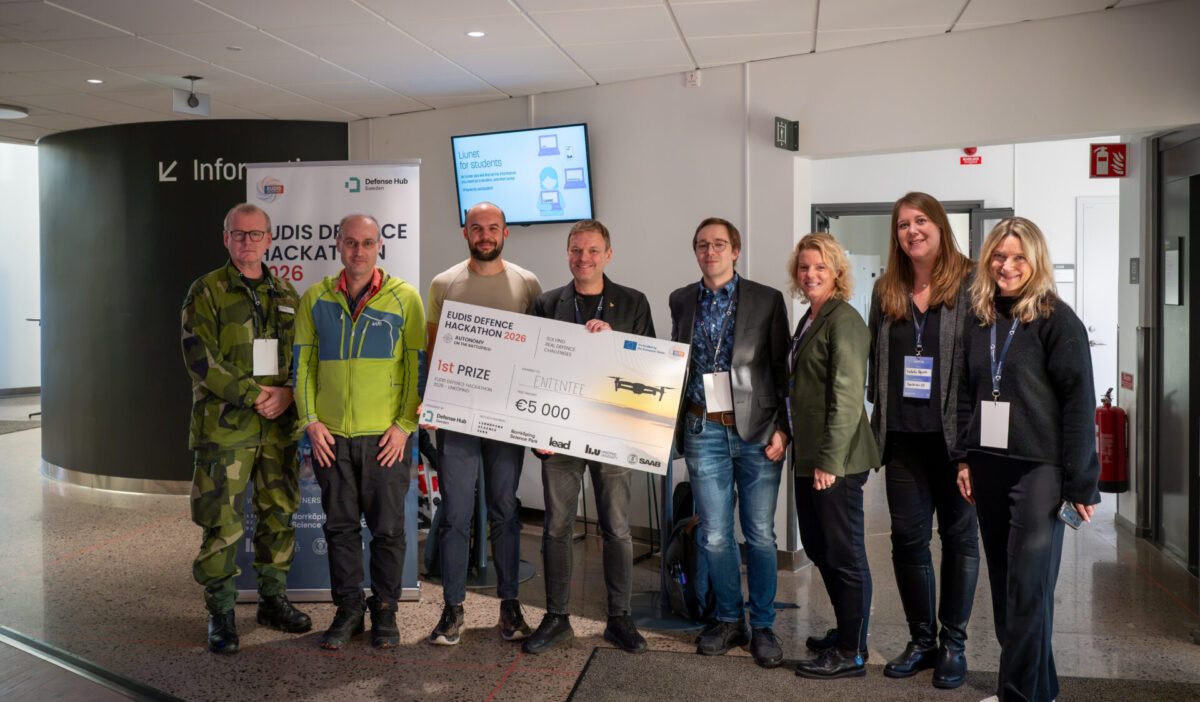
First place: Ententee – €5,000
Matouš Vondrák and Aleš Fexa from the Czech Republic developed a self-organising drone swarm system designed to detect, track and confirm aerial threats.
Combining computer vision, infrared cameras and acoustic sensors, the system enables coordinated threat tracking and dynamically adapts if individual drones are lost.
The team also secured a place in the EUDIS Mentoring Programme, providing expert support to further develop their solution.
Second place: MattheusUA – €3,000
Denys Shulzhenko, a student at the National Kharkiv Polytechnic Institute in Ukraine, and Gulked Mahamed, an IT programming student in Sundsvall, Sweden, developed a GPS-independent drone swarm system designed to withstand jamming and spoofing.
By detecting interference, using terrain-based navigation and enabling drones to communicate warnings to one another, the system can adapt flight routes and continue missions despite disruption.
In simulations, all 24 drones successfully reached their destinations despite interference.
Third place: Actia – €2,000
Elias Salo, Johannes Petersson and Mårten Svanfeldt developed Fleet Command, a real-time monitoring and command platform for land, air and maritime fleets.
The system brings together vehicle tracking, operational readiness, fault diagnostics and predictive maintenance in a unified dashboard, aiming to improve tactical decision-making and resource management.
From regional expertise to European innovation
Sweden’s first EUDIS Defence Hackathon highlighted how regional innovation ecosystems can contribute to wider European efforts by connecting operational needs with research, entrepreneurship and industrial expertise.
For participants, the event provided an opportunity to develop and test ideas in dialogue with experts from across the defence and innovation sectors. For Linköping Science Park and its partners, it demonstrated the value of creating environments where different perspectives and capabilities can meet around shared challenges.
Strengthening European defence innovation is not only about developing new technology. It is also about connecting the right people, expertise and capabilities with the challenges that need to be solved.